Epimedium Herb (Xian Ling Pi … Synonym)
- Chinese
- 仙灵脾
- Pinyin
- Xian Ling Pi
- Latin
- Herba Epimedii
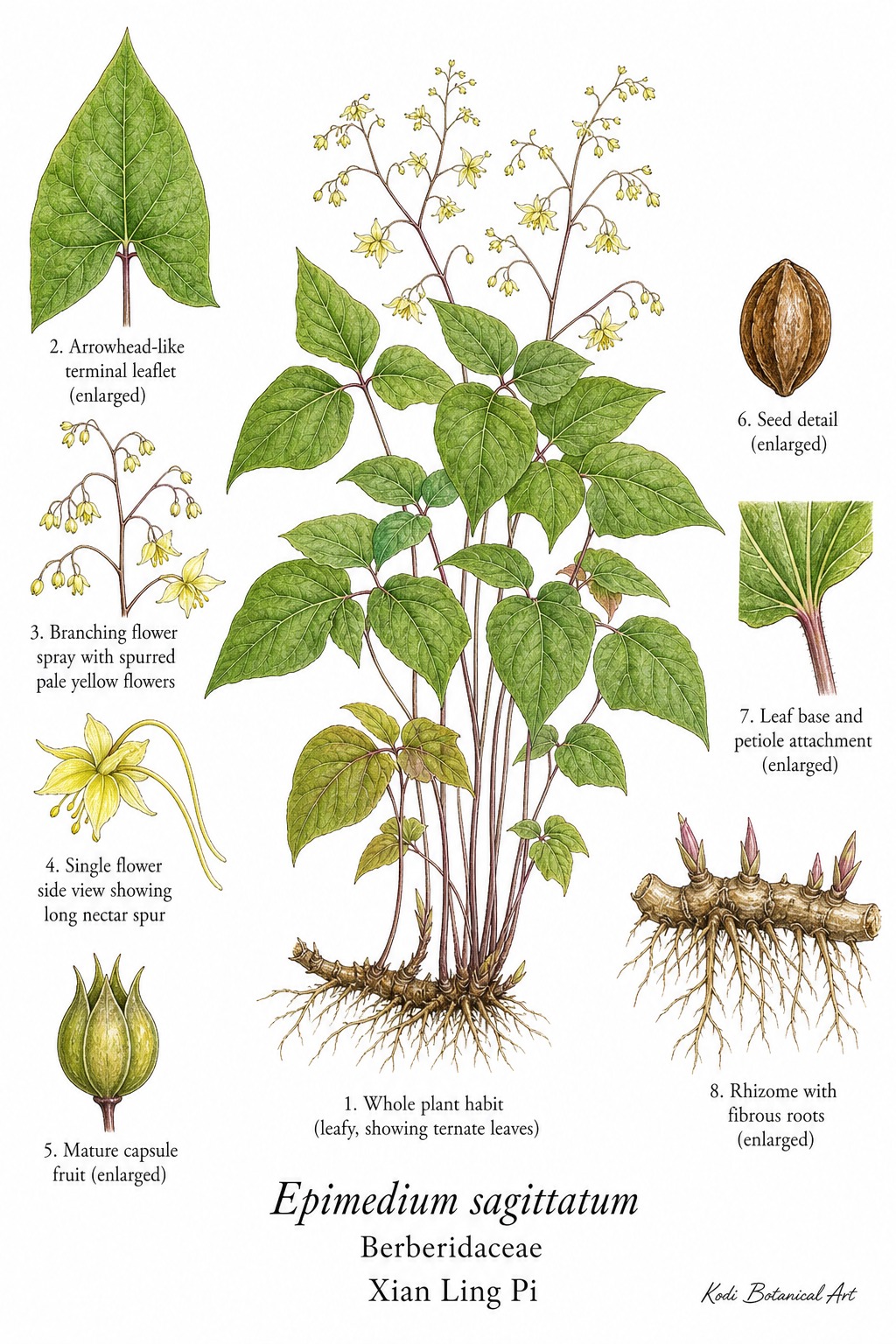
Known in TCM as Xian Ling Pi (仙灵脾), this acrid and sweet, warm herb enters the Kidney and Liver. Traditionally, it tonifies Kidney Yang and replenishes Essence, most often applied for erectile dysfunction, osteoporosis, and kidney deficiency. Modern research has identified Icariin among its active constituents.
Part used: Whole herb
Also Known As
Latin: Herba Epimedii | Pinyin: Xian Ling Pi | Chinese: 仙灵脾
TCM Properties
- Taste
- acrid, sweet
- Temperature
- warm
- Channels
- Kidney, Liver
Traditional Use
Primary Actions
- Tonifies Kidney Yang and replenishes Essence
- Strengthens sinews and bones
- Dispels Wind-Cold-Dampness and relieves Bi syndrome
- Warms Yang … impotence, infertility, cold uterine patterns
Secondary Actions
- Anti-osteoporotic and aphrodisiac … see herb #60 (Yin Yang Huo) for full detail
Classical References
- SYNONYM NOTE: Xian Ling Pi (仙灵脾, 'Immortal Spleen Herb') is the classical/archaic pharmacopoeial name for the same plant as Yin Yang Huo (淫羊藿, herb #60). Both names appear throughout classical materia medica literature and refer to the same species group (Epimedium brevicornu, E. sagittatum, E. pubescens, E. koreanum, or E. wushanense). The XLSX source imported them as two separate entries. The primary full monograph for this species is herb #60 (all-grass-of-longspur-epimedium). All pharmacological and safety data, including drug interactions, are shared with that entry.
- Ben Cao Gang Mu uses both names: Yin Yang Huo is the popular folk name; Xian Ling Pi appears in earlier Song-dynasty texts and is still used in formal pharmacy contexts
Modern Research
Active Compounds
- Icariin (principal prenylated flavonoid; PDE5 inhibitor)
- Icariside I and II
- Icaritin (estrogenic aglycone)
- Epimedin A, B, C
- Kaempferol and quercetin glycosides
Studied Effects
- See herb #60 (all-grass-of-longspur-epimedium / Yin Yang Huo) for complete pharmacological data … bone metabolism, erectile dysfunction, aromatase promotion, CYP3A4 induction
PubMed References
Safety & Interactions
Contraindications
- Yin deficiency with Heat signs
- Hormone-sensitive conditions (breast cancer, endometriosis) … estrogenic activity
Cautions
- Standard dose 6–15g decoction
- This entry (herb #61, Xian Ling Pi) is a synonym of herb #60 (Yin Yang Huo) … identical species, identical safety and drug interaction profile
- See herb #60 for full drug interaction detail: aromatase inhibitors, PDE5 inhibitors, CYP3A4 substrates
Drug Interactions
- Aromatase inhibitors (anastrozole, exemestane, letrozole): icariin promotes aromatase activity … potential reduction in drug efficacy
- PDE5 inhibitors (sildenafil, tadalafil): pharmacodynamic additive effect; avoid concurrent use
- CYP3A4 substrates: prolonged use may induce CYP3A4
Conditions
- Erectile Dysfunction Research ★★★★☆ JSON
- Osteoporosis Research ★★★★☆ JSON
- Kidney Deficiency Traditional ★★★★★ JSON
- Rheumatoid Arthritis Traditional ★★★☆☆ JSON
- Menopausal Syndrome Research ★★★☆☆ JSON
Frequently Asked Questions
What is Epimedium Herb (Xian Ling Pi … Synonym) used for?
Epimedium Herb (Xian Ling Pi … Synonym) is traditionally used to Tonifies Kidney Yang and replenishes Essence, Strengthens sinews and bones, Dispels Wind-Cold-Dampness and relieves Bi syndrome, Warms Yang … impotence, infertility, cold uterine patterns. Research has investigated its effects on: See herb #60 (all-grass-of-longspur-epimedium / Yin Yang Huo) for complete pharmacological data … bone metabolism, erectile dysfunction, aromatase promotion, CYP3A4 induction.
What are other names for Epimedium Herb (Xian Ling Pi … Synonym)?
Epimedium Herb (Xian Ling Pi … Synonym) is also known as Epimedium. In TCM: 仙灵脾 (Xian Ling Pi); Herba Epimedii.
Is Epimedium Herb (Xian Ling Pi … Synonym) safe during pregnancy?
The safety of Epimedium Herb (Xian Ling Pi … Synonym) during pregnancy has not been established. Consult a qualified healthcare provider before use.
What are the contraindications for Epimedium Herb (Xian Ling Pi … Synonym)?
Epimedium Herb (Xian Ling Pi … Synonym) should not be used in: Yin deficiency with Heat signs; Hormone-sensitive conditions (breast cancer, endometriosis) … estrogenic activity. Consult a qualified healthcare provider before use.
Does Epimedium Herb (Xian Ling Pi … Synonym) interact with any medications?
Epimedium Herb (Xian Ling Pi … Synonym) may interact with: Aromatase inhibitors (anastrozole, exemestane, letrozole): icariin promotes aromatase activity … potential reduction in drug efficacy; PDE5 inhibitors (sildenafil, tadalafil): pharmacodynamic additive effect; avoid concurrent use; CYP3A4 substrates: prolonged use may induce CYP3A4. Always inform your healthcare provider of any herbal supplements you are taking.