Earbract Hedyotis Herb
- Chinese
- 耳草
- Pinyin
- Er Cao
- Latin
- Herba Hedyotidis Auriculariae
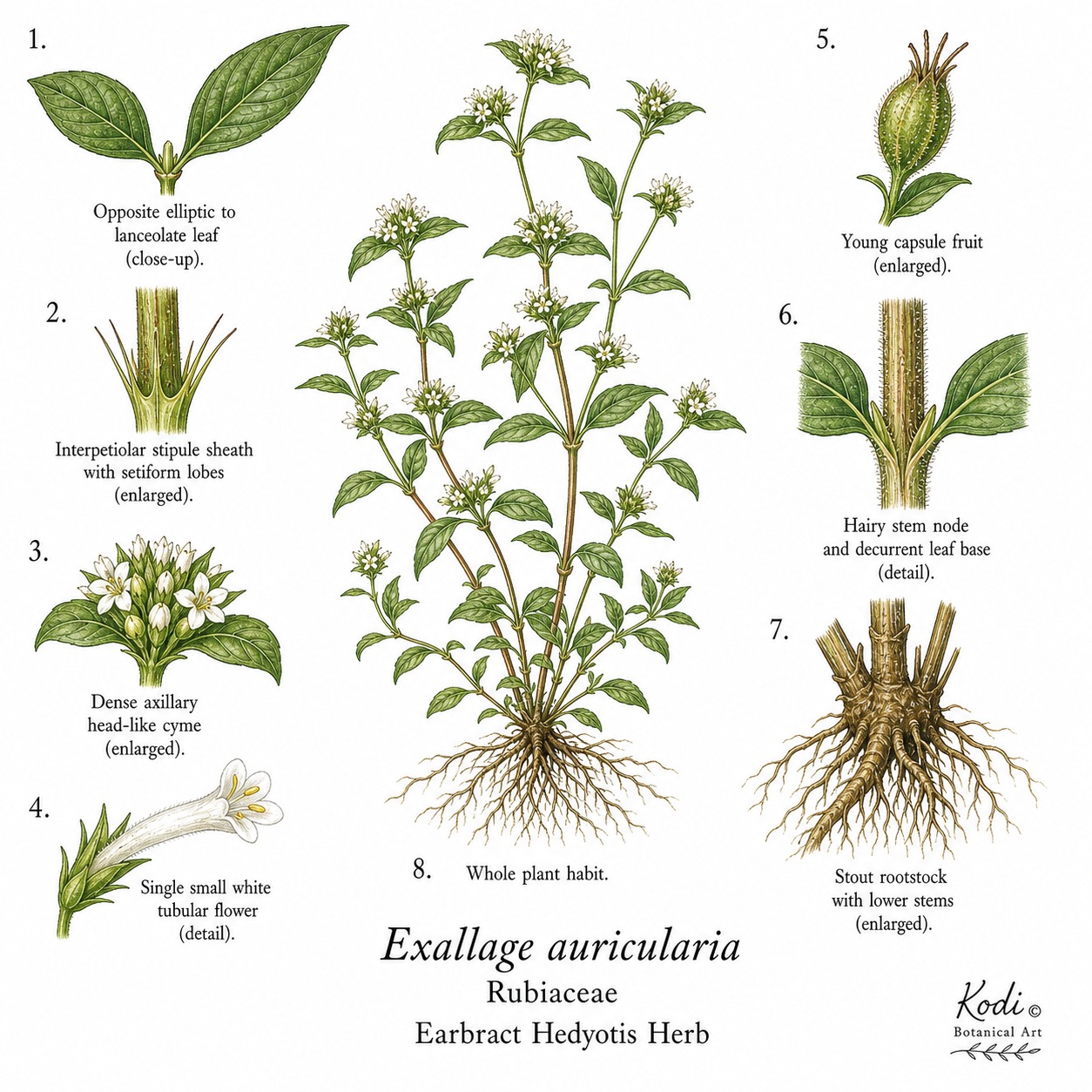
Known in TCM as Er Cao (耳草), this bitter and sweet, cool herb enters the Lung, Liver, and Large Intestine. Traditionally, it clears Heat and resolves toxicity, most often applied for hepatitis, dysentery, and diarrhea. Modern research has identified Iridoid glycosides (asperuloside, deacetylasperuloside among its active constituents.
Part used: Whole herb
Also Known As
Latin: Herba Hedyotidis Auriculariae | Pinyin: Er Cao | Chinese: 耳草
TCM Properties
- Taste
- bitter, sweet
- Temperature
- cool
- Channels
- Lung, Liver, Large Intestine
Traditional Use
Primary Actions
- Clears Heat and resolves toxicity
- Disperses Blood stasis and reduces swelling
- Stops bleeding and treats traumatic injury
- Anti-inflammatory for furuncles, abscesses, and snakebite
Secondary Actions
- Treats dysentery and diarrhea with Damp-Heat signs
- External application for infected wounds and skin infections
Classical References
- DATA QUALITY NOTE: The source XLSX maps this entry (pinyin: 耳草 Er Cao) to the Latin name 'Herba Hyperici Japonici' (Hypericum japonicum, Di Er Cao 地耳草, herb #55). This is an import error. '耳草' (Er Cao) correctly refers to Hedyotis auricularia (Rubiaceae) … a heat-clearing, detoxifying herb used in Lingnan folk medicine for hepatitis, dysentery, and traumatic injury. It is botanically unrelated to Hypericum (Hypericaceae). The Latin has been corrected to Herba Hedyotidis Auriculariae for this entry.
- Hedyotis auricularia documented in Guangdong folk medicine: used for jaundice, dysentery, traumatic swelling, and snakebite; related to Bai Hua She She Cao (白花蛇舌草, H. diffusa) which shares similar heat-clearing and anti-tumour properties
Modern Research
Active Compounds
- Iridoid glycosides (asperuloside, deacetylasperuloside … characteristic of Rubiaceae genus Hedyotis)
- Ursolic acid
- Oleanolic acid
- Flavonoids (quercetin, luteolin derivatives)
- Tannins
Studied Effects
- Anti-inflammatory: iridoid glycosides of H. auricularia inhibit COX-2 and reduce carrageenan-induced oedema in rodent models, consistent with traditional use for traumatic swelling and infections
- Antimicrobial: ethanol extract shows inhibitory activity against E. coli, S. aureus, and Pseudomonas aeruginosa in disc diffusion assays … supports use for dysentery and wound infections
- Note: limited dedicated pharmacological literature for H. auricularia compared with the well-studied H. diffusa (Bai Hua She She Cao); pharmacological profile is inferred from genus-level research
Safety & Interactions
Contraindications
- Cold-Damp diarrhea or dysentery (pale stools, cold abdomen, no fever)
- Spleen-Stomach Deficiency Cold
Cautions
- Standard dose 15–30g decoction; 30–60g fresh herb
- This entry (herb #56, Er Cao) is botanically distinct from herb #55 (Di Er Cao, Hypericum japonicum) despite superficial name similarity … see classical_refs for XLSX import discrepancy note
- Limited dedicated clinical or pharmacological data; use under practitioner supervision
Conditions
Frequently Asked Questions
What is Earbract Hedyotis Herb used for?
Earbract Hedyotis Herb is traditionally used to Clears Heat and resolves toxicity, Disperses Blood stasis and reduces swelling, Stops bleeding and treats traumatic injury, Anti-inflammatory for furuncles, abscesses, and snakebite. Research has investigated its effects on: Anti-inflammatory: iridoid glycosides of H. auricularia inhibit COX-2 and reduce carrageenan-induced oedema in rodent models, consistent with traditional use for traumatic swelling and infections; Antimicrobial: ethanol extract shows inhibitory activity against E. coli, S. aureus, and Pseudomonas aeruginosa in disc diffusion assays … supports use for dysentery and wound infections.
What are other names for Earbract Hedyotis Herb?
Earbract Hedyotis Herb is also known as Hedyotidis. In TCM: 耳草 (Er Cao); Herba Hedyotidis Auriculariae.
Is Earbract Hedyotis Herb safe during pregnancy?
The safety of Earbract Hedyotis Herb during pregnancy has not been established. Consult a qualified healthcare provider before use.
What are the contraindications for Earbract Hedyotis Herb?
Earbract Hedyotis Herb should not be used in: Cold-Damp diarrhea or dysentery (pale stools, cold abdomen, no fever); Spleen-Stomach Deficiency Cold. Consult a qualified healthcare provider before use.