Humifuse Euphorbia
- Chinese
- 地锦草
- Pinyin
- Di Jin Cao
- Latin
- Herba Euphorbiae Humifusae
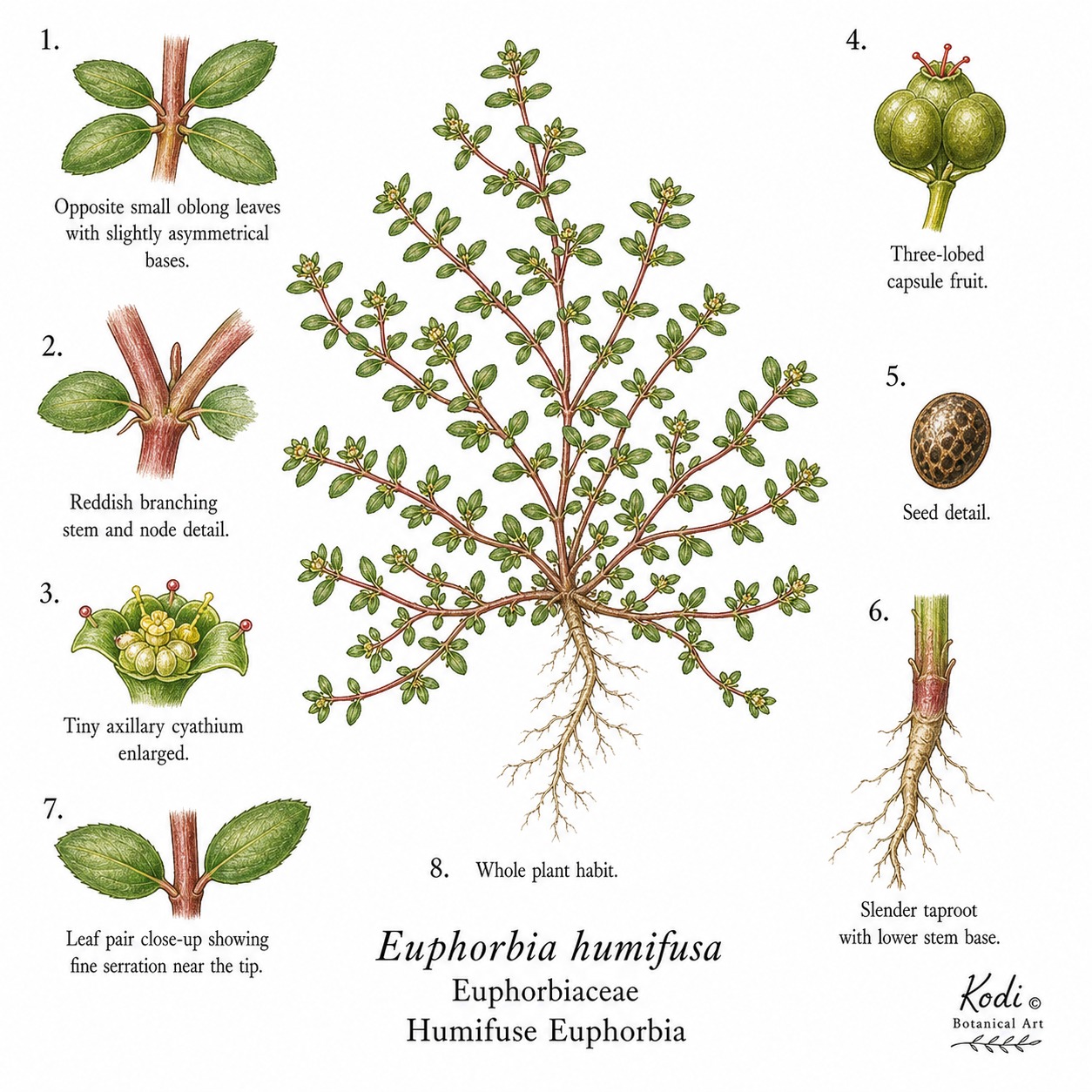
Known in TCM as Di Jin Cao (地锦草), this acrid and bitter, neutral herb enters the Liver, Large Intestine, Lung, and Stomach. Traditionally, it clears Heat and resolves toxicity, most often applied for dysentery, diarrhea, and uterine bleeding. Modern research has identified Luteolin among its active constituents.
Part used: Whole herb
Also Known As
Latin: Herba Euphorbiae Humifusae | Pinyin: Di Jin Cao | Chinese: 地锦草
TCM Properties
- Taste
- acrid, bitter
- Temperature
- neutral
- Channels
- Liver, Large Intestine, Lung, Stomach
Traditional Use
Primary Actions
- Clears Heat and resolves toxicity
- Cools the Blood and stops bleeding
- Eliminates Dampness and reduces jaundice
- Treats dysentery and diarrhea
Secondary Actions
- Promotes urination and treats chyluria (milky urine)
- External application for snakebite, abscesses, and infected wounds
Classical References
- Ben Cao Gang Mu (Li Shizhen): 'Di Jin Cao disperses blood stasis, stops bleeding, and resolves toxicity … used for bloody dysentery, hemorrhoids, uterine bleeding, traumatic bleeding, and malignant sores'
- Ben Cao Hui Yan: 'Cools the blood and disperses blood stasis; detoxifies and stops dysentery' … a key heat-clearing, blood-cooling herb of Chinese folk medicine for gastro-intestinal and bleeding disorders
Modern Research
Active Compounds
- Luteolin
- Quercetin
- Kaempferol
- Gallic acid
- Ellagic acid
- Tannins (condensed and hydrolysable)
- Phenolic acids (caffeic acid, chlorogenic acid)
- Triterpenoids (friedelin, epifriedelanol)
Studied Effects
- Hemostatic and antibacterial: E. humifusa extract incorporated into sodium alginate wound dressing via microfluidic spinning demonstrated potent hemostatic and antibacterial properties with accelerated wound healing and skin tissue regeneration in vitro and in vivo (PMID 36963544)
- Vasorelaxant: total flavonoids produce endothelium-dependent vasorelaxation in rat aorta rings via NO-cGMP pathway and potassium channel activation, supporting use in hypertension-related dysentery and bleeding patterns (PMID 29151079)
- Comprehensive pharmacological review (197 compounds characterised) confirms anti-diarrheal, hemostatic, antidiabetic, anti-HBV, anticancer, and anti-rheumatoid arthritis activities; no significant chronic toxicity in rat studies
PubMed References
Safety & Interactions
Contraindications
- Cold-Damp diarrhea or dysentery (pale stools, no fever, cold abdomen)
- Spleen-Stomach Deficiency Cold with loose stools
- Pregnancy (Blood-cooling and moving action)
Cautions
- Standard dose 9–20g decoction; 30–60g fresh herb
- Euphorbia humifusa (ground-creeping spurge) does not share the toxic milky latex properties of larger arboreal Euphorbia species … safe at standard doses
- No significant chronic toxicity observed in animal studies at therapeutic doses
Conditions
- Dysentery Traditional ★★★★★ JSON
- Diarrhea Traditional ★★★★☆ JSON
- Uterine Bleeding Traditional ★★★☆☆ JSON
- Hepatitis Research ★★☆☆☆ JSON
- Urinary Tract Infection Traditional ★★☆☆☆ JSON
Frequently Asked Questions
What is Humifuse Euphorbia used for?
Humifuse Euphorbia is traditionally used to Clears Heat and resolves toxicity, Cools the Blood and stops bleeding, Eliminates Dampness and reduces jaundice, Treats dysentery and diarrhea. Research has investigated its effects on: Hemostatic and antibacterial: E. humifusa extract incorporated into sodium alginate wound dressing via microfluidic spinning demonstrated potent hemostatic and antibacterial properties with accelerated wound healing and skin tissue regeneration in vitro and in vivo (PMID 36963544); Vasorelaxant: total flavonoids produce endothelium-dependent vasorelaxation in rat aorta rings via NO-cGMP pathway and potassium channel activation, supporting use in hypertension-related dysentery and bleeding patterns (PMID 29151079).
What are other names for Humifuse Euphorbia?
Humifuse Euphorbia is also known as Euphorbia. In TCM: 地锦草 (Di Jin Cao); Herba Euphorbiae Humifusae.
Is Humifuse Euphorbia safe during pregnancy?
Humifuse Euphorbia is not recommended during pregnancy.
What are the contraindications for Humifuse Euphorbia?
Humifuse Euphorbia should not be used in: Cold-Damp diarrhea or dysentery (pale stools, no fever, cold abdomen); Spleen-Stomach Deficiency Cold with loose stools; Pregnancy (Blood-cooling and moving action). Consult a qualified healthcare provider before use.