Hooker Winghead Herb
- Chinese
- 益寿草
- Pinyin
- Yi Shou Cao
- Latin
- Herba Pterocephali
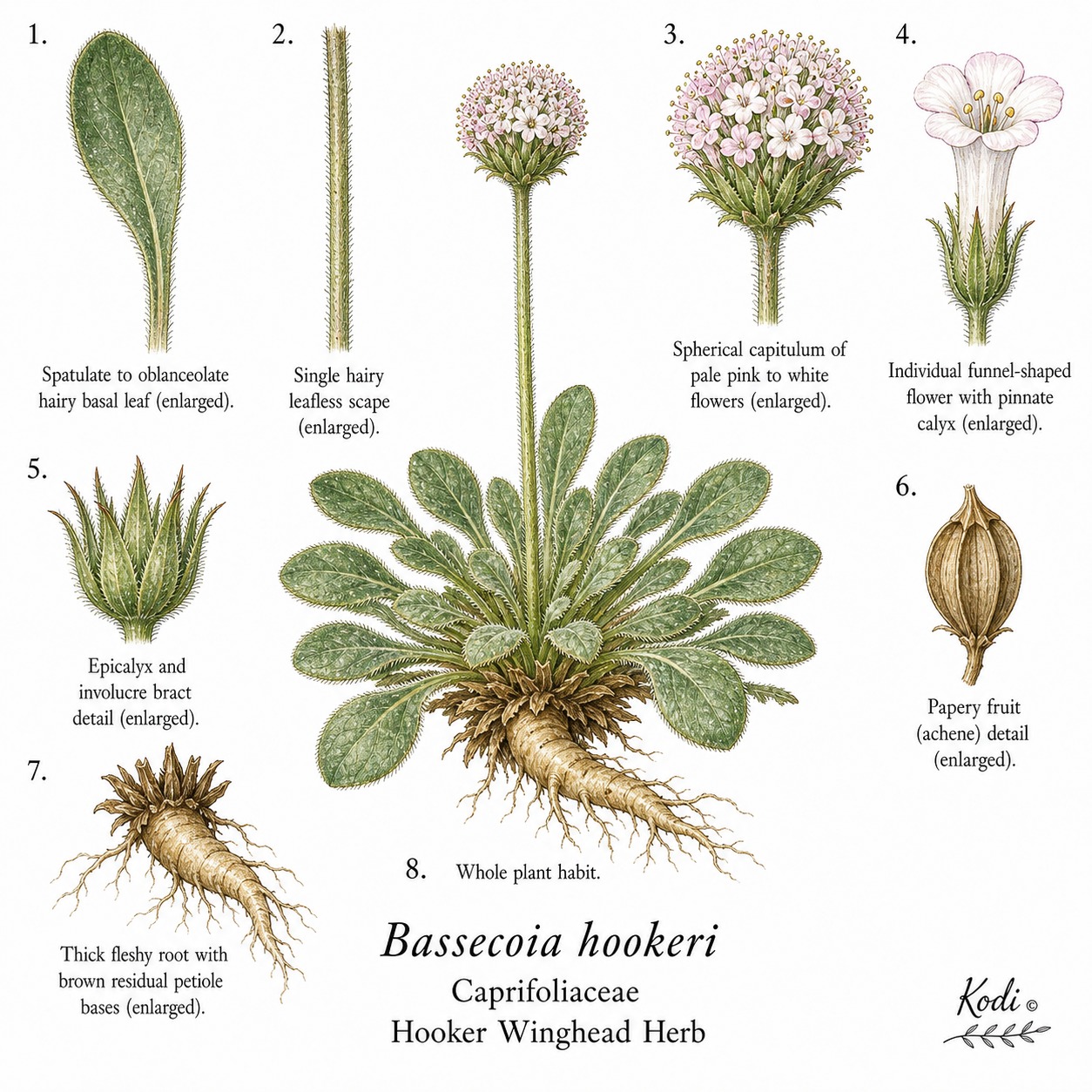
Known in TCM as Yi Shou Cao (益寿草), this bitter, cool herb enters the Liver and Large Intestine. Traditionally, it clears Heat and resolves toxicity, most often applied for rheumatoid arthritis, joint pain, and dysentery. Modern research has identified Bis-iridoids among its active constituents.
Part used: Whole herb
Also Known As
Latin: Herba Pterocephali | Pinyin: Yi Shou Cao | Chinese: 益寿草
TCM Properties
- Taste
- bitter
- Temperature
- cool
- Channels
- Liver, Large Intestine
Traditional Use
Primary Actions
- Clears Heat and resolves toxicity
- Dispels Wind-Dampness and relieves Bi syndrome pain
- Stops dysentery and resolves intestinal heat
- Eliminates pestilential toxin
Secondary Actions
- Neuroprotective … Tibetan use for conditions of mental confusion and cognitive decline
- Anti-rheumatic for chronic wind-damp joint disorders
Classical References
- Tibetan Pharmacopoeia: known as Bang-zi-du-wu (邦子都乌); one of the core herbs of traditional Tibetan medicine used for treating cold disorders, pain, plague-type febrile illness, and arthritis
- Chinese Pharmacopoeia (1977): adopted under the formal Chinese name 益寿草 (Yi Shou Cao, Longevity Herb); note … stub data listed pinyin as 'Tu Ku Shen' (土苦参), a name associated with Sophora species; corrected to Yi Shou Cao per pharmacopoeia and PMC review (PMC9038101)
Modern Research
Active Compounds
- Bis-iridoids (principal bioactives; ~33 compounds including sweroside, loganin, sylvestroside I, cantleyoside)
- Seco-iridoid glycosides
- Iridoid oligomers
- Lignans and phenylpropanoids (19 compounds)
- Oleanane- and ursane-type triterpenoids (18 compounds)
- Flavonoids
Studied Effects
- Anti-arthritic: total glycosides reduced paw swelling by 38% and arthritis scores by 25.3% in rat CIA model; mechanism involves NF-κB p65 suppression (33–78% reduction) and reduction of oxidative stress markers MDA and NO (PMID 27937009)
- Anti-inflammatory and analgesic: standardised bis-iridoid extract showed significant antinociceptive and anti-inflammatory activity in multiple animal models via COX-2 inhibition; peripheral analgesic action predominant (PMID 29410154)
- Comprehensive review of 93 identified compounds confirms anti-rheumatoid arthritis, anticancer (hepatocellular carcinoma), and neuroprotective (dopaminergic neuron protection) pharmacological profile (PMID 35478563)
PubMed References
- Traditional uses, phytochemistry, pharmacology, and toxicology of Pterocephalus hookeri: a review (2022)
- The anti-arthritic activity of total glycosides from Pterocephalus hookeri, a traditional Tibetan herbal medicine (2017)
- Antinociceptive and anti-inflammatory activities of a standardised extract of bis-iridoids from Pterocephalus hookeri (2018)
Safety & Interactions
Contraindications
- Cold-Damp Bi syndrome without Heat signs
- Spleen-Stomach Deficiency Cold
Cautions
- Standard dose 9–15g decoction
- Hepatotoxicity reported with n-butanol extract in animal studies: elevated ALT, AST, ALP, and bilirubin via inflammatory and necrotic pathways … avoid concentrated alcohol extracts; decoction use under practitioner supervision
- Primarily a Tibetan minority medicine; limited long-term clinical data for Han Chinese population
Conditions
- Rheumatoid Arthritis Research ★★★★☆ JSON
- Joint Pain Research ★★★★☆ JSON
- Dysentery Traditional ★★★☆☆ JSON
- Fever Traditional ★★☆☆☆ JSON
Frequently Asked Questions
What is Hooker Winghead Herb used for?
Hooker Winghead Herb is traditionally used to Clears Heat and resolves toxicity, Dispels Wind-Dampness and relieves Bi syndrome pain, Stops dysentery and resolves intestinal heat, Eliminates pestilential toxin. Research has investigated its effects on: Anti-arthritic: total glycosides reduced paw swelling by 38% and arthritis scores by 25.3% in rat CIA model; mechanism involves NF-κB p65 suppression (33–78% reduction) and reduction of oxidative stress markers MDA and NO (PMID 27937009); Anti-inflammatory and analgesic: standardised bis-iridoid extract showed significant antinociceptive and anti-inflammatory activity in multiple animal models via COX-2 inhibition; peripheral analgesic action predominant (PMID 29410154).
What are other names for Hooker Winghead Herb?
Hooker Winghead Herb is also known as Pterocephali. In TCM: 益寿草 (Yi Shou Cao); Herba Pterocephali.
Is Hooker Winghead Herb safe during pregnancy?
The safety of Hooker Winghead Herb during pregnancy has not been established. Consult a qualified healthcare provider before use.
What are the contraindications for Hooker Winghead Herb?
Hooker Winghead Herb should not be used in: Cold-Damp Bi syndrome without Heat signs; Spleen-Stomach Deficiency Cold. Consult a qualified healthcare provider before use.