Heartleaf Houttuynia
- Chinese
- 鱼腥草
- Pinyin
- Yu Xing Cao
- Latin
- Herba Houttuyniae
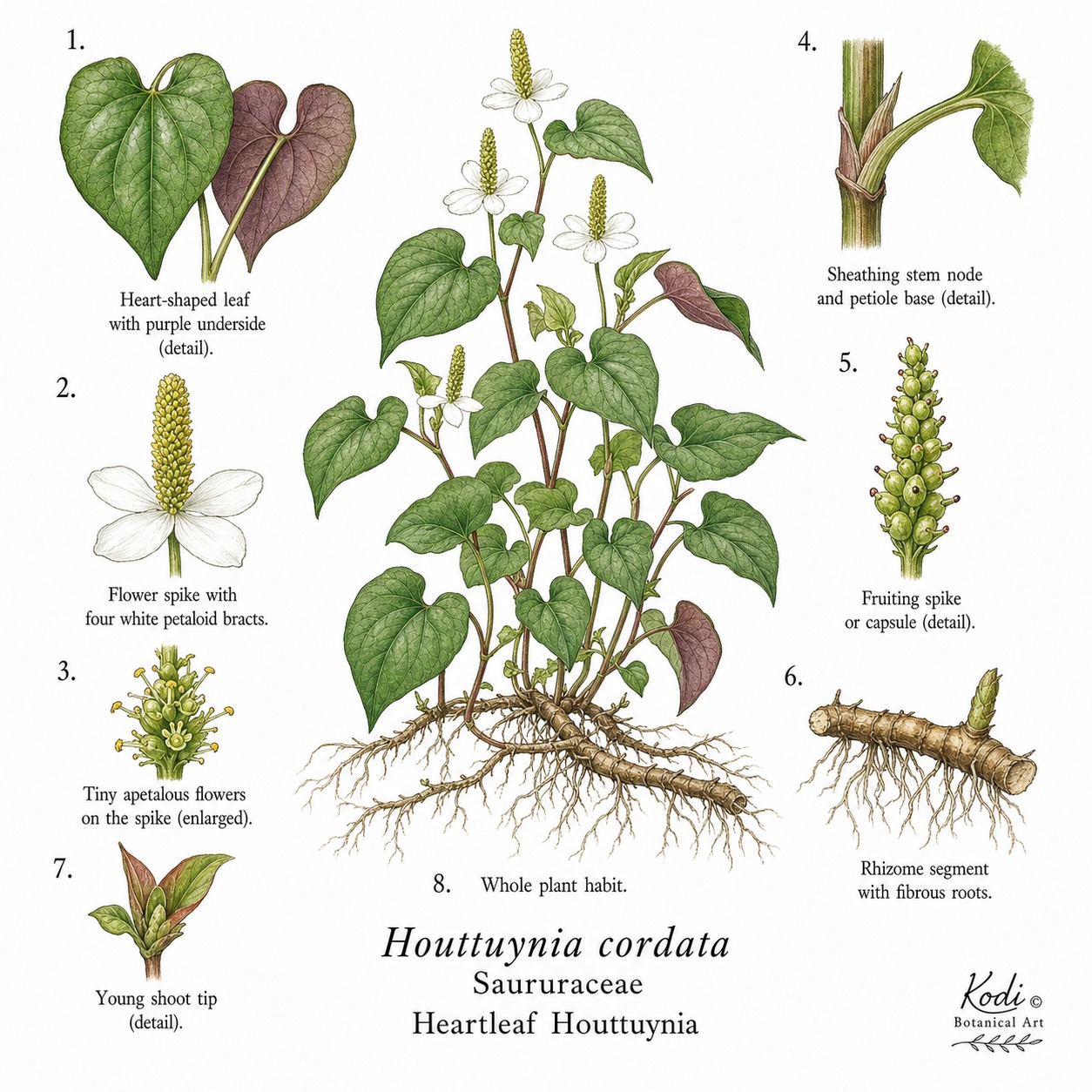
Known in TCM as Yu Xing Cao (鱼腥草), this acrid, slightly cold herb enters the Lung, Large Intestine, and Bladder. Traditionally, it clears Heat and resolves toxicity (especially Lung heat-toxicity), most often applied for pneumonia, upper respiratory infection, and bronchitis. Modern research has identified Houttuynin among its active constituents.
Part used: Whole herb
Also Known As
Latin: Herba Houttuyniae | Pinyin: Yu Xing Cao | Chinese: 鱼腥草
TCM Properties
- Taste
- acrid
- Temperature
- slightly cold
- Channels
- Lung, Large Intestine, Bladder
Traditional Use
Primary Actions
- Clears Heat and resolves toxicity (especially Lung heat-toxicity)
- Drains Lung abscess and expels pus
- Clears Damp-Heat and promotes urination
- Reduces swelling and relieves inflammatory pain
Secondary Actions
- Broad-spectrum antibacterial for respiratory and urinary tract infections
- Antiviral support; used in SARS prevention protocols in China
Classic Formulas
- Wei Jing Tang (苇茎汤) … classic formula for Lung abscess; Yu Xing Cao added in modern modifications to strengthen heat-clearing and pus-expelling action
- Used as principal herb in numerous modern patent formulas for pneumonia, bronchitis, and upper respiratory infections
Classical References
- Ben Cao Jing Shu (Qing dynasty): 'Yu Xing Cao clears the Lung heat, dissipates toxicity, and discharges pus … the essential herb for heat abscess of the Lung'
- Named for its distinctive fishy odour (鱼腥 = fishy smell); the volatile compound houttuynin (decanoylacetaldehyde) is responsible and degrades on prolonged cooking … add late in decoction or use fresh
Modern Research
Active Compounds
- Houttuynin / decanoylacetaldehyde (volatile antibacterial; degrades on heating)
- Quercetin
- Rutin
- Hyperin (quercetin-3-galactoside)
- Quercitrin
- Kaempferol
- Aristolactams A and B (present at low levels; structurally distinct from nephrotoxic aristolochic acids)
Studied Effects
- Antiviral: H. cordata extract and quercetin inhibit murine coronavirus and dengue virus; quercetin, baicalin, and luteolin identified as SARS-CoV-2 protein inhibitors with experimental validation showing inhibition of LPS-induced IL-6 and IL-1β and pseudovirus cell invasion (PMID 34512097)
- Antibacterial: sodium houttuyfonate shows synergistic activity against MRSA combined with EDTA-Na2, significantly improving survival in murine infection model; nutraceutical review confirms broad antiviral spectrum (PMID 36059903)
- Anti-inflammatory: water and ethanolic extracts reduce NO and TNF-α production in LPS-stimulated macrophages by up to 30% via NF-κB inhibition
PubMed References
Safety & Interactions
Contraindications
- Cold-Damp Lung patterns (cough with clear-white phlegm, no fever)
- Spleen-Stomach Deficiency Cold
Cautions
- Standard dose 15–30g fresh herb or 15–25g dried in decoction; add in final 5 minutes to preserve volatile houttuynin
- Aristolactams A and B are present at low levels; aristolochic acids (the nephrotoxic compounds) are absent or below detection … avoid prolonged unsupervised use as precaution
- Injectable preparations (sodium houttuyfonate injection) were suspended nationally in China in 2006 following serious allergic reactions; injectable form is NOT equivalent to oral/decoction safety profile
- Oral and topical use considered safe at standard doses based on centuries of use
Drug Interactions
- Anticoagulants / antiplatelet drugs: possible additive blood-thinning effect due to quercetin content; monitor for increased bleeding risk
- Immunosuppressants: potential additive immunomodulatory effect; caution in transplant patients or those on immunosuppressive therapy
Conditions
- Pneumonia Research ★★★★☆ JSON
- Upper Respiratory Infection Research ★★★★☆ JSON
- Bronchitis Traditional ★★★★☆ JSON
- Urinary Tract Infection Traditional ★★★☆☆ JSON
- Pharyngitis Traditional ★★★☆☆ JSON
Frequently Asked Questions
What is Heartleaf Houttuynia used for?
Heartleaf Houttuynia is traditionally used to Clears Heat and resolves toxicity (especially Lung heat-toxicity), Drains Lung abscess and expels pus, Clears Damp-Heat and promotes urination, Reduces swelling and relieves inflammatory pain. Research has investigated its effects on: Antiviral: H. cordata extract and quercetin inhibit murine coronavirus and dengue virus; quercetin, baicalin, and luteolin identified as SARS-CoV-2 protein inhibitors with experimental validation showing inhibition of LPS-induced IL-6 and IL-1β and pseudovirus cell invasion (PMID 34512097); Antibacterial: sodium houttuyfonate shows synergistic activity against MRSA combined with EDTA-Na2, significantly improving survival in murine infection model; nutraceutical review confirms broad antiviral spectrum (PMID 36059903).
What are other names for Heartleaf Houttuynia?
Heartleaf Houttuynia is also known as Houttuynia. In TCM: 鱼腥草 (Yu Xing Cao); Herba Houttuyniae.
Is Heartleaf Houttuynia safe during pregnancy?
The safety of Heartleaf Houttuynia during pregnancy has not been established. Consult a qualified healthcare provider before use.
What are the contraindications for Heartleaf Houttuynia?
Heartleaf Houttuynia should not be used in: Cold-Damp Lung patterns (cough with clear-white phlegm, no fever); Spleen-Stomach Deficiency Cold. Consult a qualified healthcare provider before use.
Does Heartleaf Houttuynia interact with any medications?
Heartleaf Houttuynia may interact with: Anticoagulants / antiplatelet drugs: possible additive blood-thinning effect due to quercetin content; monitor for increased bleeding risk; Immunosuppressants: potential additive immunomodulatory effect; caution in transplant patients or those on immunosuppressive therapy. Always inform your healthcare provider of any herbal supplements you are taking.