Glandularstalk St. Paulswort
- Chinese
- 豨薟草
- Pinyin
- Xi Xian Cao
- Latin
- Herba Siegesbeckiae
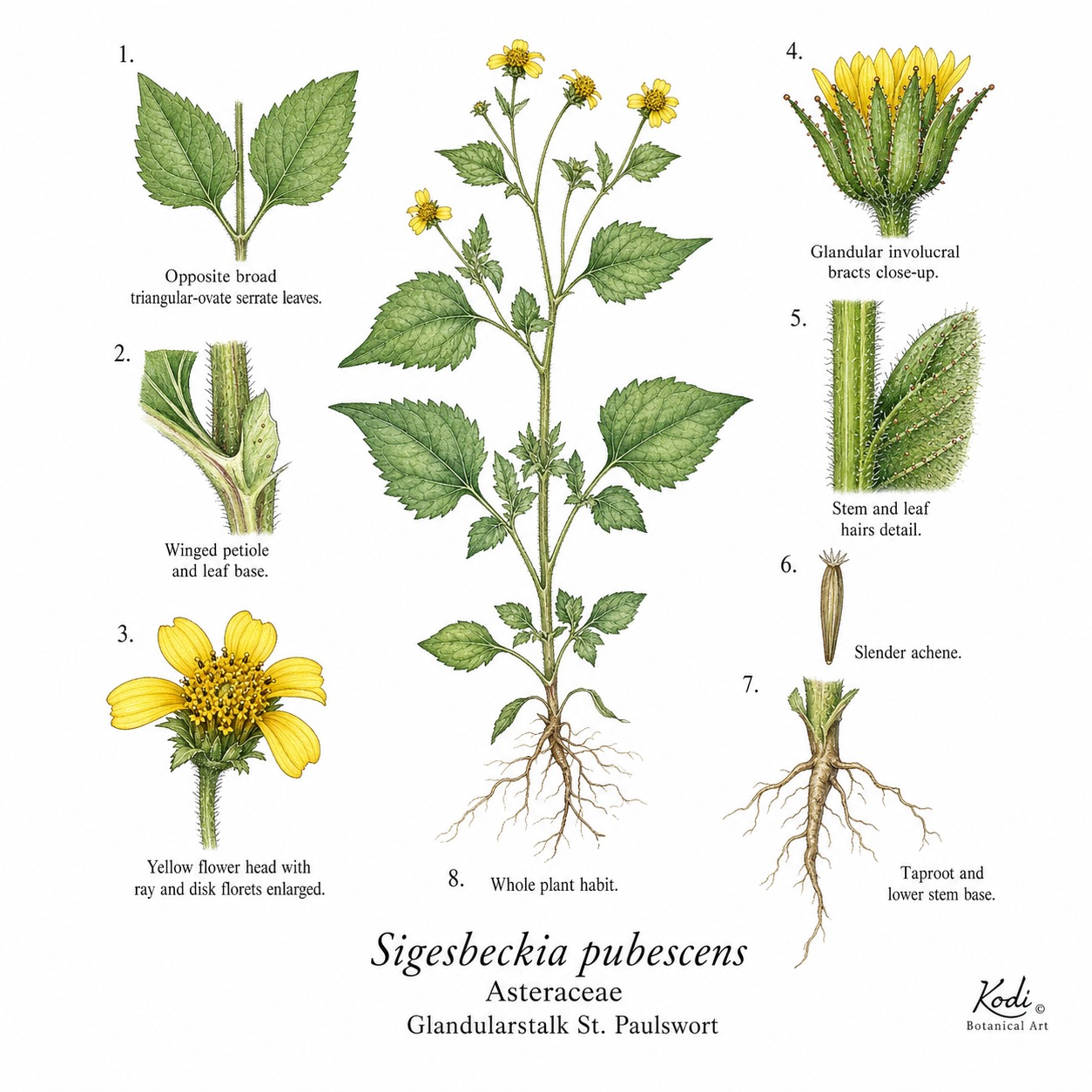
Known in TCM as Xi Xian Cao (豨薟草), this bitter and acrid, cold herb enters the Liver and Kidney. Traditionally, it dispels Wind-Dampness and unblocks the collaterals, most often applied for rheumatoid arthritis, joint pain, and hypertension. Modern research has identified Kirenol among its active constituents.
Part used: Whole herb
Also Known As
Latin: Herba Siegesbeckiae | Pinyin: Xi Xian Cao | Chinese: 豨薟草
TCM Properties
- Taste
- bitter, acrid
- Temperature
- cold
- Channels
- Liver, Kidney
Traditional Use
Primary Actions
- Dispels Wind-Dampness and unblocks the collaterals
- Benefits the joints and strengthens sinews and bones
- Clears Heat and resolves toxicity
- Calms the Liver and subdues Liver Yang
Secondary Actions
- Opens channels to address post-stroke hemiplegia and numbness
- Clears Damp-Heat from the skin (eczema, urticaria)
Classic Formulas
- Xi Xian Wan (豨薟丸) … classic patent formula using wine-processed Xi Xian Cao to dispel Wind-Damp, strengthen sinews and bones, and treat chronic Bi syndrome with joint pain and lower back weakness
Classical References
- Ben Cao Gang Mu (Li Shizhen): notes Xi Xian as a key herb for Wind-Damp conditions affecting the bones and joints; distinguishes raw (cold, detoxifying) from processed (warm, tonifying) forms
- Listed as slightly toxic (有小毒) in the Chinese Pharmacopoeia; wine-steaming transforms its thermal nature from cold to warm and reduces nausea
Modern Research
Active Compounds
- Kirenol (ent-pimarane diterpenoid; principal bioactive compound)
- Darutoside (labdane diterpenoid)
- Hesperidin (flavonoid)
- Ent-kaurane diterpenoids
- Rosmarinic acid
- Chlorogenic acid
Studied Effects
- Anti-inflammatory: ethanol extract significantly reduces NO, IL-6, and TNF-α in LPS-stimulated macrophages; inhibits NF-κB activation by blocking IκB-α degradation (PMID 25328884)
- Kirenol, darutoside, and hesperidin collectively inhibit COX-2 protein expression and reduce inflammatory cell infiltration, providing anti-inflammatory and analgesic effects (PMID 33152433)
- Anti-hyperuricemic and analgesic activity demonstrated in phenolic-rich fractions, supporting traditional use in gout and joint pain (PMID 28376775)
PubMed References
- Anti-inflammatory effects of Siegesbeckia orientalis ethanol extract in in vitro and in vivo models (2014)
- Kirenol, darutoside and hesperidin contribute to anti-inflammatory and analgesic activities of Siegesbeckia pubescens by inhibiting COX-2 (2021)
- Anti-hyperuricemic, anti-inflammatory and analgesic effects of Siegesbeckia orientalis with high phenolic content (2017)
Safety & Interactions
Contraindications
- Pregnancy … channel-opening action; contraindicated
- Blood deficiency without Wind-Damp pattern
- Spleen-Stomach Deficiency Cold (raw herb especially)
Cautions
- Classified as slightly toxic (有小毒) in Chinese Pharmacopoeia; raw form can cause nausea and vomiting at higher doses
- Wine-steamed (processed) form is gentler and preferred for chronic deficiency conditions
- Standard dose 9–12g decoction; up to 30g used under supervision for hypertension or severe Bi syndrome
- Overdose may cause persistent vomiting requiring medical attention
Drug Interactions
- Antihypertensive medications: additive blood-pressure-lowering effect possible; monitor for hypotension
- Immunosuppressants: preclinical immunosuppressive activity reported; caution with concurrent immunosuppressive therapy
Conditions
- Rheumatoid Arthritis Research ★★★★★ JSON
- Joint Pain Research ★★★★☆ JSON
- Hypertension Traditional ★★★☆☆ JSON
- Low Back Pain Traditional ★★★☆☆ JSON
- Urticaria Traditional ★★☆☆☆ JSON
Frequently Asked Questions
What is Glandularstalk St. Paulswort used for?
Glandularstalk St. Paulswort is traditionally used to Dispels Wind-Dampness and unblocks the collaterals, Benefits the joints and strengthens sinews and bones, Clears Heat and resolves toxicity, Calms the Liver and subdues Liver Yang. Research has investigated its effects on: Anti-inflammatory: ethanol extract significantly reduces NO, IL-6, and TNF-α in LPS-stimulated macrophages; inhibits NF-κB activation by blocking IκB-α degradation (PMID 25328884); Kirenol, darutoside, and hesperidin collectively inhibit COX-2 protein expression and reduce inflammatory cell infiltration, providing anti-inflammatory and analgesic effects (PMID 33152433).
What are other names for Glandularstalk St. Paulswort?
Glandularstalk St. Paulswort is also known as Siegesbeckia. In TCM: 豨薟草 (Xi Xian Cao); Herba Siegesbeckiae.
Is Glandularstalk St. Paulswort safe during pregnancy?
Glandularstalk St. Paulswort is not recommended during pregnancy.
What are the contraindications for Glandularstalk St. Paulswort?
Glandularstalk St. Paulswort should not be used in: Pregnancy … channel-opening action; contraindicated; Blood deficiency without Wind-Damp pattern; Spleen-Stomach Deficiency Cold (raw herb especially). Consult a qualified healthcare provider before use.
Does Glandularstalk St. Paulswort interact with any medications?
Glandularstalk St. Paulswort may interact with: Antihypertensive medications: additive blood-pressure-lowering effect possible; monitor for hypotension; Immunosuppressants: preclinical immunosuppressive activity reported; caution with concurrent immunosuppressive therapy. Always inform your healthcare provider of any herbal supplements you are taking.