All-Grass of Diluteyellow Crotalaria
- Chinese
- 黄花地丁
- Pinyin
- Huang Hua Di Ding
- Latin
- Herba Crotalariae Albidae
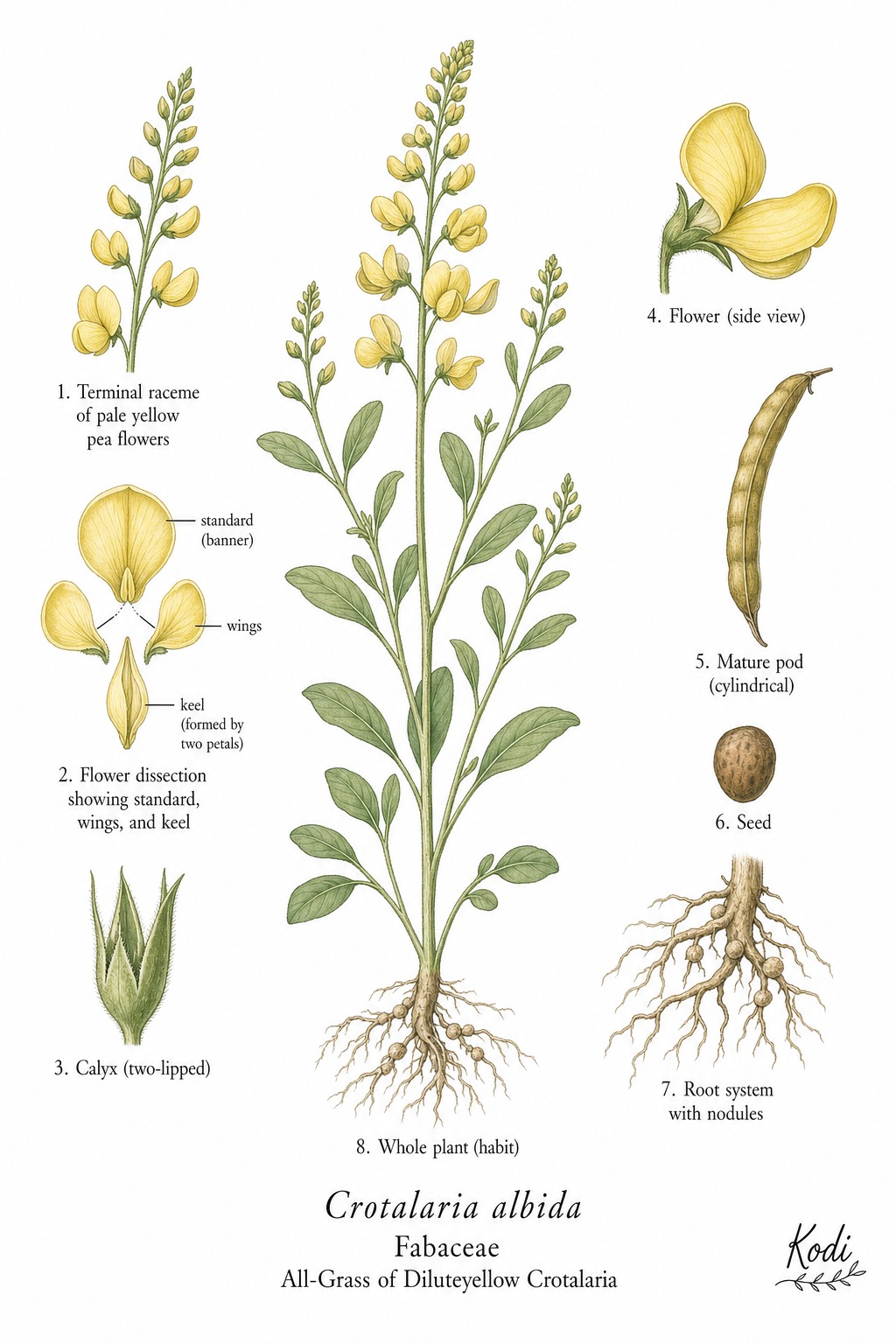
Known in TCM as Huang Hua Di Ding (黄花地丁), this bitter and sweet, cool herb enters the Lung and Liver. Traditionally, it clears heat and resolves toxin; treats carbuncles, sores, and infectious inflammatory conditions, most often applied for bronchitis, asthma, and urinary tract infection. Modern research has identified Neocroalbidine among its active constituents.
Part used: Whole herb
Also Known As
Latin: Herba Crotalariae Albidae | Pinyin: Huang Hua Di Ding | Chinese: 黄花地丁
TCM Properties
- Taste
- bitter, sweet
- Temperature
- cool
- Channels
- Lung, Liver
Traditional Use
Primary Actions
- Clears heat and resolves toxin; treats carbuncles, sores, and infectious inflammatory conditions
- Stops cough and calms wheezing; used for bronchitis, pneumonia, and asthma
- Prevents and treats malaria; traditional use in Yunnan province for febrile malarial patterns
Secondary Actions
- Promotes urination and clears damp-heat in the lower jiao; treats urethritis and cystitis
- Clears liver heat and supports liver function in hepatitis and gastroenteritis patterns
- Transforms phlegm-heat in the Lung; relieves chest oppression with thick yellow sputum
Classical References
- Regional folk medicine … Yunnan province (southwest China); commonly known as Huang Hua Di Ding (yellow-flower ground-nail) and used for cough, phlegm accumulation, and anti-inflammatory conditions
Modern Research
Active Compounds
- Neocroalbidine (pyrrolizidine alkaloid)
- Neocroalbidinone (pyrrolizidine alkaloid)
- 2"-isopropenyl dihydrofuran isoflavonoids (novel compounds 1 and 3)
- 2"-isopropenyl dihydrofuran chromone (novel compound 2)
- Flavonoids (16 compounds isolated from aerial parts)
Studied Effects
- Anti-obesity … isoflavonoids inhibit adipocyte differentiation and lipid accumulation in 3T3-L1 cells via PPAR-γ pathway suppression (PMID 26285147)
- Anti-inflammatory … genus-wide activity confirmed across multiple Crotalaria species
- Antimicrobial … demonstrated against bacterial and fungal pathogens in Crotalaria genus studies
- Hepatotoxic potential … pyrrolizidine alkaloids (PAs) are metabolised by CYP3A4/CYP2A6 to reactive pyrroles that cause hepatocyte nuclear damage
PubMed References
Safety & Interactions
Contraindications
- Pre-existing liver disease or elevated liver enzymes … pyrrolizidine alkaloids are directly hepatotoxic
- Pregnancy … pyrrolizidine alkaloids are fetotoxic; contraindicated throughout all trimesters
- Paediatric use … immature hepatic metabolism increases PA toxicity risk
- Concurrent hepatotoxic drug therapy … additive liver damage risk
Cautions
- Limit duration of use; pyrrolizidine alkaloids accumulate and cause cumulative hepatotoxicity
- Use with caution in renal impairment … nephrotoxic potential reported for pyrrolizidine class
- Monitor for signs of pulmonary hypertension with extended use; monocrotaline-type PAs implicated in vascular toxicity
- Cool thermal nature … use cautiously in cold-deficiency patterns, chronic diarrhea, or poor digestion
Drug Interactions
- CYP3A4 and CYP2A6 substrates and inhibitors … Pyrrolizidine alkaloids are metabolised via CYP3A4 and CYP2A6 to hepatotoxic pyrrole intermediates; CYP inhibitors may reduce detoxification and increase toxicity; CYP inducers may accelerate formation of toxic pyrroles (High) Source: PMC6032134 … Pyrrolizidine Alkaloids: Chemistry, Pharmacology, Toxicology and Food Safety
- Hepatotoxic drugs (methotrexate, isoniazid, valproate, statins) … Additive hepatotoxic effect; simultaneous use of PA-containing herbs and hepatotoxic pharmaceuticals significantly raises risk of sinusoidal obstruction syndrome (SOS/VOD) (High) Source: PMC8508847 … Metabolic Toxification of 1,2-Unsaturated Pyrrolizidine Alkaloids Causes Human Hepatic Sinusoidal Obstruction Syndrome
Conditions
- Bronchitis Traditional ★★★★☆ JSON
- Asthma Traditional ★★★☆☆ JSON
- Urinary Tract Infection Traditional ★★★☆☆ JSON
- Hepatitis Traditional ★★☆☆☆ JSON
- Obesity Preclinical ★★☆☆☆ JSON
Frequently Asked Questions
What is All-Grass of Diluteyellow Crotalaria used for?
All-Grass of Diluteyellow Crotalaria is traditionally used to Clears heat and resolves toxin; treats carbuncles, sores, and infectious inflammatory conditions, Stops cough and calms wheezing; used for bronchitis, pneumonia, and asthma, Prevents and treats malaria; traditional use in Yunnan province for febrile malarial patterns. Research has investigated its effects on: Anti-obesity … isoflavonoids inhibit adipocyte differentiation and lipid accumulation in 3T3-L1 cells via PPAR-γ pathway suppression (PMID 26285147); Anti-inflammatory … genus-wide activity confirmed across multiple Crotalaria species.
What are other names for All-Grass of Diluteyellow Crotalaria?
All-Grass of Diluteyellow Crotalaria is also known as Crotalaria. In TCM: 黄花地丁 (Huang Hua Di Ding); Herba Crotalariae Albidae.
Is All-Grass of Diluteyellow Crotalaria safe during pregnancy?
All-Grass of Diluteyellow Crotalaria is not recommended during pregnancy.
What are the contraindications for All-Grass of Diluteyellow Crotalaria?
All-Grass of Diluteyellow Crotalaria should not be used in: Pre-existing liver disease or elevated liver enzymes … pyrrolizidine alkaloids are directly hepatotoxic; Pregnancy … pyrrolizidine alkaloids are fetotoxic; contraindicated throughout all trimesters; Paediatric use … immature hepatic metabolism increases PA toxicity risk; Concurrent hepatotoxic drug therapy … additive liver damage risk. Consult a qualified healthcare provider before use.
Does All-Grass of Diluteyellow Crotalaria interact with any medications?
All-Grass of Diluteyellow Crotalaria may interact with: CYP3A4 and CYP2A6 substrates and inhibitors - Pyrrolizidine alkaloids are metabolised via CYP3A4 and CYP2A6 to hepatotoxic pyrrole intermediates; CYP inhibitors may reduce detoxification and increase toxicity; CYP inducers may accelerate formation of toxic pyrroles - (High severity); Hepatotoxic drugs (methotrexate, isoniazid, valproate, statins) - Additive hepatotoxic effect; simultaneous use of PA-containing herbs and hepatotoxic pharmaceuticals significantly raises risk of sinusoidal obstruction syndrome (SOS/VOD) - (High severity). Always inform your healthcare provider of any herbal supplements you are taking.